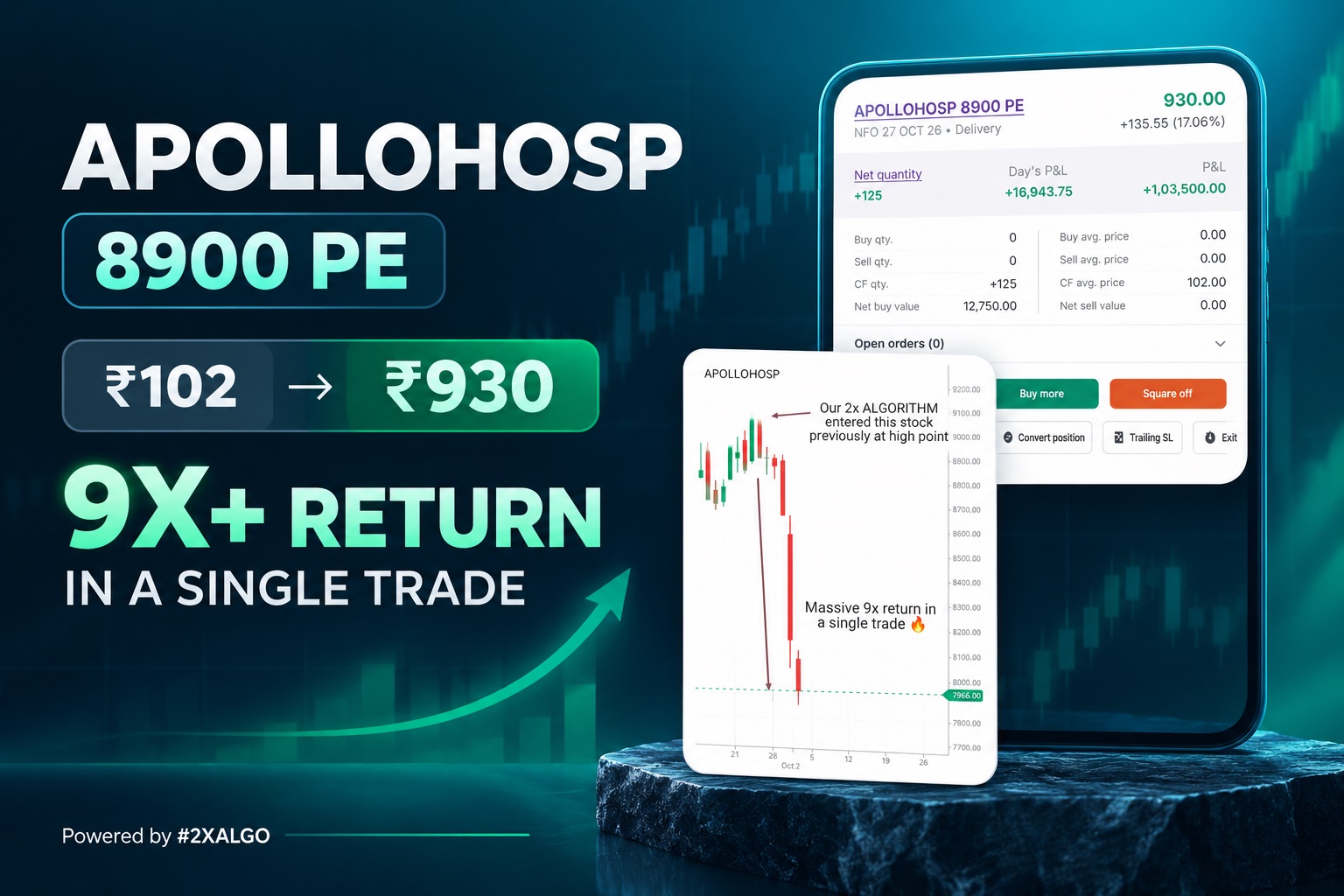
Can algorithmic trading outperform the broader market?
Algorithmic trading can potentially outperform a broad market index when its strategy identifies individual stocks with stronger price momentum than the overall market. However, performance varies by strategy and market conditions, and past results do not guarantee future returns.
Table of Contents
- Chapter 1: When the Broader Market Loses Momentum
- Chapter 2: The Market Doesn't Move Every Stock the Same Way
- Chapter 3: The Bosch Opportunity
- Chapter 4: How Q7's Algorithm Identified Bosch
- Chapter 5: When the Market Was Struggling, Bosch Was Moving
- Chapter 6: The AlgoFut Trade: ₹58,000 Net Profit
- Chapter 7: Alpha Doesn't Come From Following the Crowd
- Chapter 8: The Bigger Lesson for Traders
- Chapter 9: The Goal Isn't to Beat the Market Every Day
- Frequently Asked Questions (FAQs)
Markets do not always offer easy opportunities. There are periods when indices move sideways, momentum becomes inconsistent and traders struggle to find meaningful opportunities across the broader market. In such conditions, simply following the index can leave traders frustrated.
But the market is not one single trade. Even when the broader indices are struggling, individual stocks can behave very differently. That is where systematic stock selection becomes important.
The Bosch trade identified by Q7 Trading Solutions‘ AlgoFut provides an interesting example of how a systematic approach can identify an individual stock opportunity while the broader market environment remains challenging.
When the Broader Market Loses Momentum
For extended periods, the broader market can become range-bound and directionless. Nifty and broader indices may move within relatively narrow ranges while volumes and momentum fluctuate. Recent Indian markets have indeed experienced periods of weakness and caution. In August 2026, Nifty recorded a seven-session losing streak amid concerns around crude prices, global yields and geopolitical uncertainty. This kind of environment creates a difficult question for traders:
Where is the opportunity?
The answer is not necessarily found by predicting the next move of Nifty. Sometimes, the opportunity is hidden inside an individual stock.
The Market Doesn’t Move Every Stock the Same Way
One of the biggest misconceptions in trading is that if Nifty is weak, every stock should be weak. That simply isn’t how markets work. Money continuously rotates between sectors and individual companies. While some stocks decline, others can break out, establish new highs or attract strong buying interest.
That means a trader focused only on the index can miss some of the strongest opportunities happening underneath the surface. The challenge is identifying those opportunities before the move becomes obvious to everyone else. This is where systematic stock selection can potentially create an edge.
The Bosch Opportunity
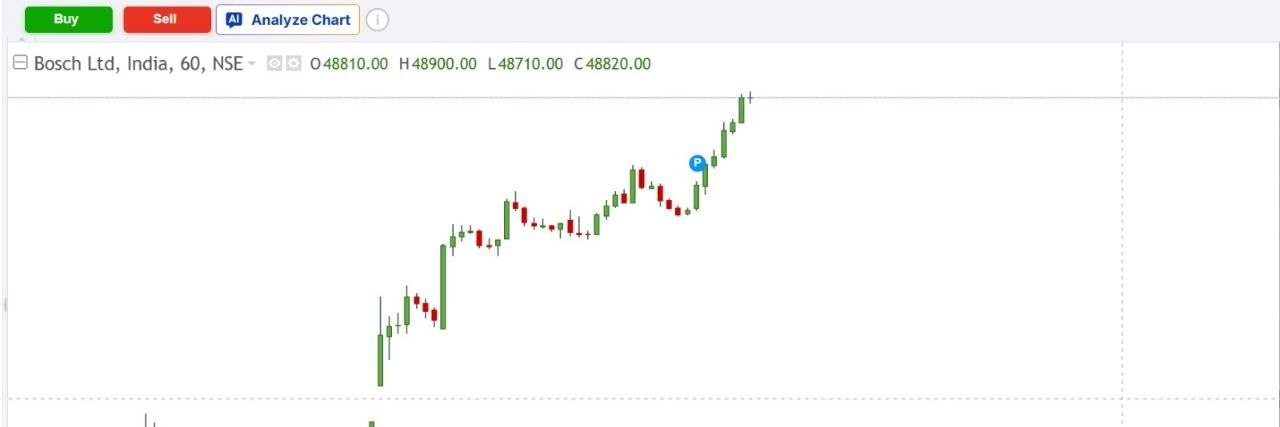
During a period when the broader market was struggling to establish strong momentum, Q7’s algorithm identified Bosch Ltd. as a trading opportunity. The chart supplied for this case study shows a clear upward move in Bosch, with the stock progressing through multiple resistance levels and continuing higher. The important point is not simply that Bosch went up.
The important point is that the algorithm selected the stock while the broader market environment was not providing an obvious directional opportunity. That is the essence of stock selection.
Instead of asking:
“Is Nifty going up?”
a systematic approach can also ask:
“Which individual stocks are displaying the conditions that our strategy is designed to trade?”
How Q7’s Algorithm Identified Bosch
A systematic trading strategy does not need every stock to move. It needs to identify the stocks that match its predefined conditions. The Bosch example demonstrates this principle. While the broader market was facing limited momentum, Bosch developed a strong directional move. The supplied chart shows the stock moving higher through successive price levels and eventually reaching a lifetime-high zone.
Bosch price movement identified by the Q7 trading system.
The objective of an algorithm is not to know which stock will rise with certainty. No system can know that. The objective is to systematically identify opportunities according to predefined rules and execute them without allowing emotions to interfere with every decision.
When the Market Was Struggling, Bosch Was Moving
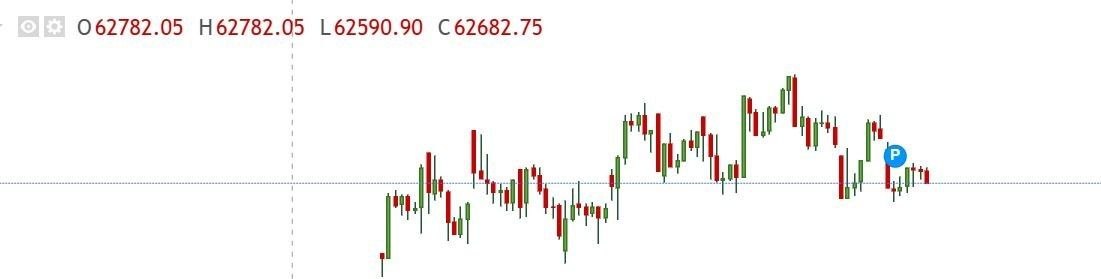
This is where the comparison becomes interesting. The broader market can remain flat, volatile or weak while a specific stock produces a significant directional move.
That is precisely why stock selection matters. A trader who simply waits for Nifty to become strongly bullish may remain inactive. A systematic stock-selection strategy, however, can continue scanning for individual opportunities. The supplied Bosch chart illustrates this difference clearly: while the broader market environment was challenging, Bosch continued to demonstrate strong price momentum. That creates the possibility of generating alpha through stock selection rather than simply depending on index direction.
The AlgoFut Trade: ₹58,000 Net Profit
The second part of this case study comes from the Bosch futures position identified by #AlgoFut.
According to the Q7 performance figures supplied for this trade, the Bosch September futures position generated:
₹58,000 Total Net Profit
₹41,000+ Intraday Gain
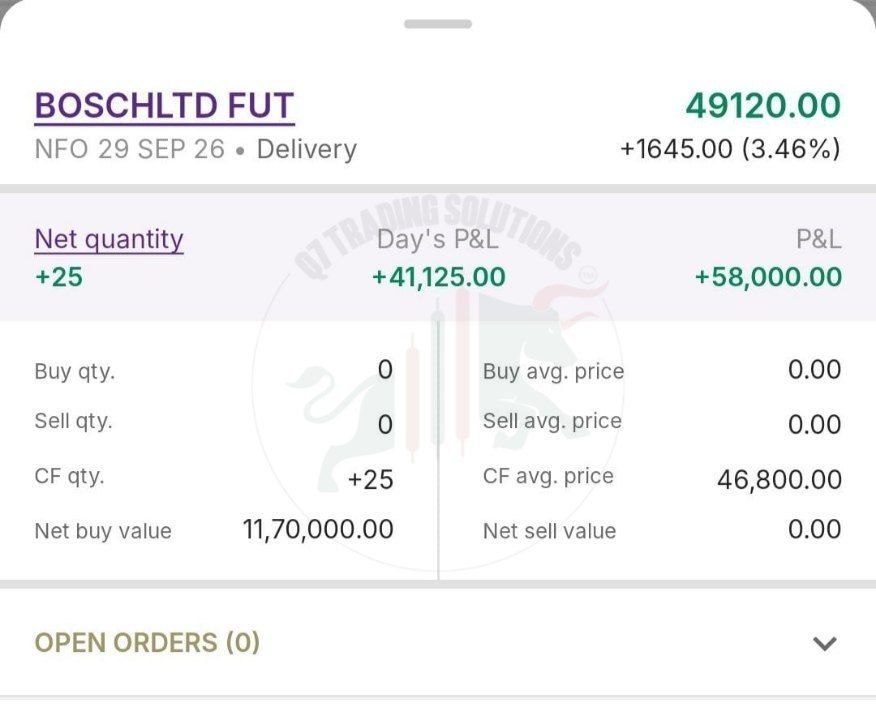
The particularly notable part of the example is that the trade was taken during a session when the broader market was under pressure. According to the supplied trade data, Nifty was down approximately 135 points, while the Midcap index was down approximately 300 points, yet the Bosch position identified by AlgoFut was approximately 4% higher intraday. This is the kind of divergence that demonstrates why stock selection can matter more than simply being bullish or bearish on the overall market.
Why Stock Selection Matters
The Bosch example highlights one of the most important principles of active trading:
You don’t necessarily need the entire market to rise. You need to identify the right opportunity. When Nifty is moving sideways, hundreds of individual stocks are still moving every day. Some are breaking down. Some are consolidating. Some are preparing for a breakout. And some are already beginning a strong trend. The difficulty for a manual trader is monitoring all of these opportunities simultaneously while also managing entries, exits, risk and emotions. This is where systematic automation can become valuable.
Alpha Doesn’t Come From Following the Crowd
The moment a stock becomes obvious to everyone, the opportunity may already have changed. This is why professional trading is not simply about reacting to headlines.
It is about having a repeatable process for identifying opportunities. In the Bosch example, the market did not need to become universally bullish for the trade to work. The algorithm only needed to identify a stock whose price behaviour matched its trading conditions. That is a fundamentally different approach from waiting for everyone to agree that the market is going higher.
Why Manual Trading Struggles With This Approach
A human trader has limited attention. You may be monitoring Nifty, Bank Nifty, Midcap, individual stocks, futures positions, news, global markets and dozens of charts simultaneously. Then comes the psychological pressure.
What if the trade moves against you?
Should you exit?
What if another stock is moving faster?
Should you switch?
What if Nifty falls?
Should you close the position?
These questions can interfere with execution. An algorithm does not experience that internal debate. Once predefined conditions are met, the system can execute according to its programmed rules.
The Difference a System Can Make
The objective of algorithmic trading is not to eliminate market risk. It is not to guarantee profits. And it certainly does not mean that every stock selected by an algorithm will become a winner. The real advantage is process consistency. A systematic trading system can continuously apply predefined criteria without getting distracted by FOMO, fear, excitement or the noise surrounding the market. That becomes particularly valuable when opportunities are scattered across individual stocks rather than concentrated in the index.
What This Bosch Trade Really Demonstrates
The biggest lesson from the Bosch trade is not simply the ₹58,000 profit. The bigger lesson is the difference between market direction and stock opportunity. The broader market can be weak. The index can be under pressure. Retail sentiment can be uncertain. And yet, a specific stock can deliver a powerful move. The ability to identify that divergence is where systematic stock selection can potentially create meaningful alpha.
The Bigger Lesson for Traders
Many traders spend enormous amounts of time trying to predict whether Nifty will go up or down. But markets are far more complex than a single index. There are thousands of individual price movements happening underneath the headline index every day. The real challenge is finding the opportunities that fit your strategy and having the discipline to execute them consistently. That is what algorithmic trading is designed to address.
Instead of manually searching through charts and reacting to every market movement, traders can use a systematic framework to identify and execute predefined opportunities.
The Goal Isn’t to Beat the Market Every Day
A single successful trade should never be treated as proof that an algorithm will outperform indefinitely. The correct way to evaluate a trading system is through its long-term performance, drawdowns, risk-adjusted returns, consistency and behaviour across different market conditions. The Bosch trade is therefore best viewed as a case study of stock-selection capability, rather than a promise of future returns. And that distinction matters. Because sustainable trading is not about finding one spectacular trade. It is about building a repeatable process capable of finding opportunities again and again.
Key Takeaway
The Bosch trade demonstrates an important principle of active trading:
A weak or sideways market does not mean every stock is weak.
While the broader market can struggle for direction, individual stocks can develop powerful trends.
Q7’s AlgoFut identified Bosch and, according to the supplied Q7 trade data, generated ₹58,000 in total net profit, including ₹41,000+ intraday gain, during a session in which Nifty and Midcap were under pressure. That is the potential power of systematic stock selection. The goal is not to predict everything. The goal is to systematically identify the opportunities that fit the strategy.
Don’t just trade the market.
Find the opportunities within the market.
Frequently Asked Questions (FAQs)
Stock selection in algorithmic trading involves using predefined rules and quantitative conditions to identify individual stocks that match a particular trading strategy instead of relying solely on the direction of a broad market index.
Yes. A systematic strategy can continue scanning individual stocks even when Nifty is declining. Individual stocks can move differently from the broader index, although no algorithm can guarantee that a selected trade will be profitable.
According to the Q7 performance figures supplied for this case study, the Bosch futures trade generated ₹58,000 in total net profit, including an intraday gain of ₹41,000+.
No. Algorithmic trading does not guarantee profits or eliminate market risk. Every strategy can experience losing trades and drawdowns.
Stock selection is important because individual stocks can significantly outperform or underperform a broad market index. Identifying stocks with favourable price behaviour can potentially create opportunities even when the broader market is weak or range-bound.