What is the Dadanpatrabar Deep-Sea Port project in West Bengal?
The Dadanpatrabar Deep-Sea Port is a proposed maritime infrastructure project in Purba Medinipur, West Bengal, aimed at boosting cargo handling capacity, international trade connectivity, logistics development, and industrial growth
Table of Contents
- Chapter 1: West Bengal Embarks on a Historic Infrastructure Expansion
- Chapter 2: Dadanpatrabar Deep-Sea Port: A Potential Game Changer
- Chapter 3: Kolkata Water Metro: Revolutionizing Urban Transportation
- Chapter 4: Sagarmala 2.0 and Inland Waterway Expansion
- Chapter 5: Tourism and Heritage Development
- Chapter 6: Economic Impact on West Bengal
- Chapter 7: Top Stocks That Could Benefit from West Bengal's Maritime Growth Story
- Chapter 8: Investment Perspective
- Chapter 9: Frequently Asked Questions (FAQ)
West Bengal Embarks on a Historic Infrastructure Expansion
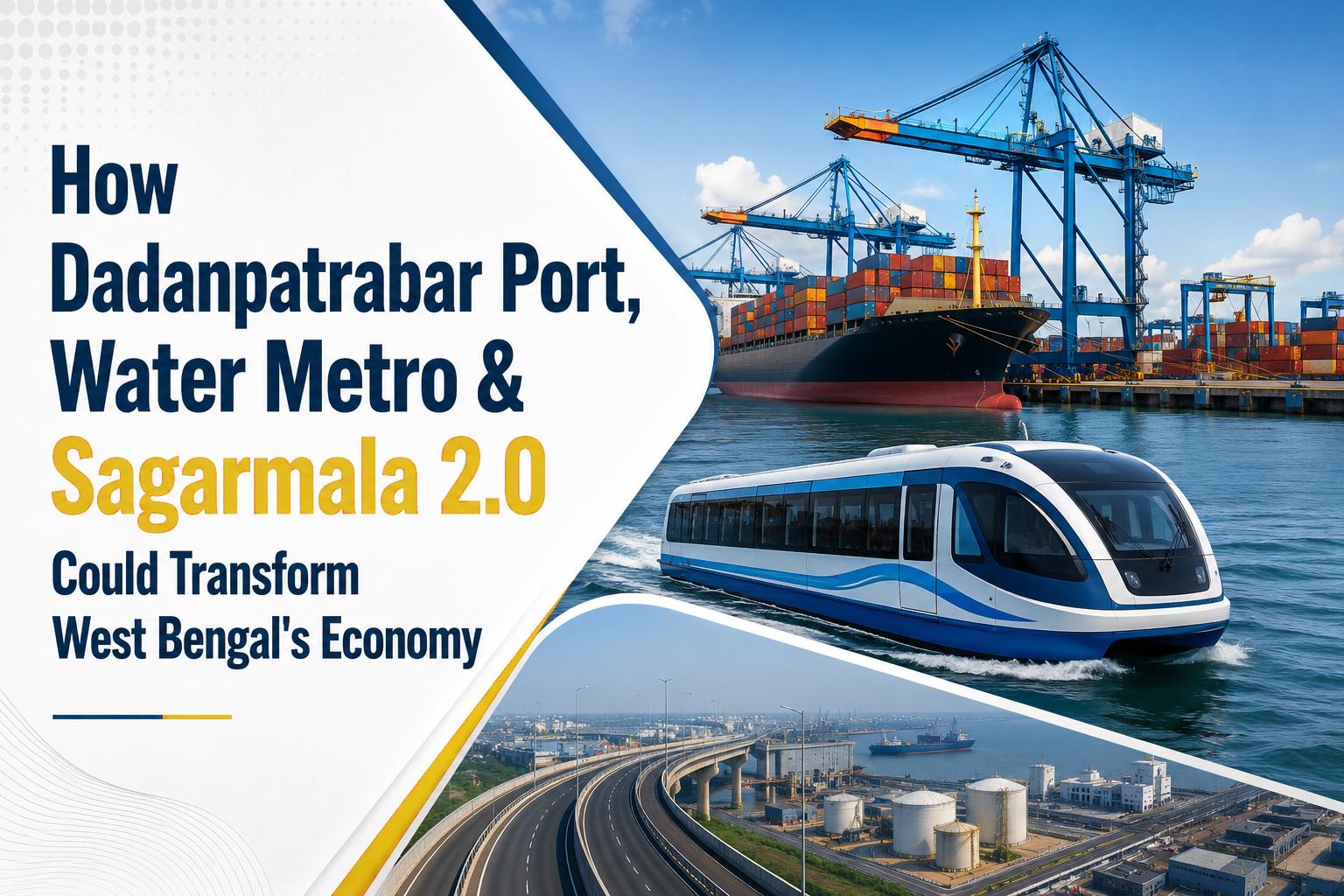
West Bengal is positioning itself for a new era of economic growth through a series of transformative maritime and infrastructure initiatives. The state’s plans include the development of a deep-sea port at Dadanpatrabar, integration into India’s Water Metro network, expansion of inland waterways, modernization of riverfront infrastructure, and participation in Sagarmala 2.0.
These projects could significantly enhance trade connectivity, attract industrial investments, generate employment, and establish West Bengal as a major logistics and maritime hub on India’s eastern coast.
For investors, businesses, and policymakers, this could represent one of the most significant growth opportunities emerging in eastern India.
Dadanpatrabar Deep-Sea Port: A Potential Game Changer
The proposed deep-sea port at Dadanpatrabar in Purba Medinipur is expected to become one of the largest maritime infrastructure projects in West Bengal.With approximately 1,700 acres identified for development, the project aims to provide direct access to deep-draft vessels, improve cargo handling capabilities, and strengthen India’s eastern maritime trade routes.
Key Benefits:
Enhanced international trade connectivity
Increased cargo handling capacity
Development of logistics and warehousing clusters
Attraction of manufacturing and export-oriented industries
Generation of thousands of direct and indirect jobs
The project has the potential to replicate some of the economic success witnessed in coastal states such as Gujarat and Odisha through port-led industrialization.
Kolkata Water Metro: Revolutionizing Urban Transportation
Kolkata is set to join the national Water Metro network, becoming one of the few Indian cities utilizing waterways as an integrated urban transportation system.
The initiative aims to reduce road congestion, improve commuting efficiency, and create new tourism opportunities along the Hooghly River.
Expected Impact:
Faster urban mobility
Reduced traffic congestion
Eco-friendly transportation
Boost to river tourism
Increased economic activity around waterfront areas
Sagarmala 2.0 and Inland Waterway Expansion
The state’s participation in Sagarmala 2.0 signals a long-term commitment to maritime infrastructure development.
The plan includes:
Construction of 44 new jetties
Development of 25 additional jetties along national waterways
Strengthening cargo transportation networks
Enhancing multimodal logistics infrastructure
Improved waterway connectivity can significantly reduce transportation costs, making industries more competitive while improving supply chain efficiency.
Tourism and Heritage Development
The state government also plans to elevate Gangasagar Mela to an international-level event.
Additional initiatives include:
- Redevelopment of six historic ghats on the Ganga
- Beautification of Bagbazar and Ahiritola ghats
- Establishment of a maritime museum at Syama Prasad Mookerjee Port
- Strengthening cultural and heritage tourism
These developments can attract both domestic and international tourists while creating new opportunities for hospitality, retail, and local businesses.
Economic Impact on West Bengal
The combined impact of these initiatives could create a powerful economic multiplier effect.
1. Increased Industrial Investment
Improved port infrastructure often attracts manufacturing industries, export businesses, and logistics companies.
2. Employment Generation
Construction, logistics, transportation, tourism, and industrial sectors could create substantial employment opportunities.
3. Real Estate Appreciation
Areas surrounding ports, industrial corridors, and transportation hubs may experience increased demand and property value appreciation.
4. Enhanced Trade Competitiveness
Lower logistics costs can improve the competitiveness of businesses operating from eastern India.
5. Regional Economic Development
Port-led growth has historically accelerated economic development across entire regions.
Top Stocks That Could Benefit from West Bengal’s Maritime Growth Story
Adani Ports and Special Economic Zone
India’s largest private port operator with extensive experience in port development and management.
Larsen & Toubro (L&T)
A leading infrastructure and engineering company likely to benefit from large-scale construction and EPC contracts.
Container Corporation of India (CONCOR)
Increased container movement and freight activity could support long-term growth.
Rail Vikas Nigam Limited (RVNL)
Rail connectivity projects linked to ports and industrial corridors may create new business opportunities.
Shipping Corporation of India (SCI)
Greater maritime trade volumes could positively impact shipping operations.
Allcargo Logistics
Potential beneficiary of increased freight forwarding and logistics demand.
Transport Corporation of India (TCI)
Growth in multimodal transportation and supply chain services could support expansion.
IRCON International
Infrastructure development related to rail and logistics connectivity may provide future opportunities.
Investment Perspective
While project announcements are promising, investors should monitor:
- Project approvals
- Land acquisition progress
- Funding commitments
- Tender allocations
- Construction milestones
- Policy implementation timelines
Successful execution will be the key determinant of long-term economic and investment outcomes.
The combination of the Dadanpatrabar Deep-Sea Port, Kolkata Water Metro, Sagarmala 2.0 participation, inland waterway expansion, and tourism infrastructure development represents a potentially transformative phase for West Bengal.
If implemented effectively, these initiatives could strengthen Bengal’s position as a major maritime, logistics, tourism, and industrial hub while creating substantial opportunities for businesses and investors.
As infrastructure spending accelerates and connectivity improves, West Bengal may emerge as one of India’s most important growth stories over the coming decade.
Frequently Asked Questions (FAQ)
The Dadanpatrabar Deep-Sea Port is a proposed maritime infrastructure project in Purba Medinipur, West Bengal. The project aims to improve cargo handling capacity, strengthen international trade connectivity, attract industrial investments, and support logistics development across eastern India.
The Kolkata Water Metro is expected to improve urban transportation through waterway-based commuting. It can help reduce traffic congestion, provide eco-friendly mobility solutions, boost tourism, and increase economic activity around the Hooghly River.
Sagarmala 2.0 is the Government of India’s maritime infrastructure development initiative focused on port modernization, coastal development, logistics efficiency, and waterway connectivity. West Bengal’s participation could strengthen its position as a major maritime and logistics hub.
Expanded inland waterways can reduce transportation costs, improve cargo movement efficiency, enhance supply chain networks, and support industrial development by providing cost-effective logistics solutions.
Industries such as logistics, shipping, warehousing, manufacturing, transportation, tourism, real estate, and export-oriented businesses could benefit from improved port and waterway infrastructure.
Potential beneficiaries include Adani Ports and Special Economic Zone, Larsen & Toubro (L&T), Container Corporation of India (CONCOR), Rail Vikas Nigam Limited (RVNL), Shipping Corporation of India (SCI), Allcargo Logistics, Transport Corporation of India (TCI), and IRCON International.
The project could create thousands of direct and indirect employment opportunities across construction, logistics, transportation, manufacturing, warehousing, tourism, and related sectors.
Investors should track project approvals, land acquisition progress, funding commitments, tender allocations, construction milestones, policy implementation timelines, and overall execution progress.