Why is India's Semiconductor Mission 2.0 important for investors?
India’s Semiconductor Mission 2.0 aims to strengthen the country’s semiconductor ecosystem through large-scale government support for chip manufacturing, packaging, materials, specialty chemicals, and semiconductor equipment. As this ecosystem develops, several listed companies across electronics manufacturing, engineering, specialty chemicals, and industrial gases could benefit from long-term industry growth.
India’s Next Structural Growth Story Could Be Semiconductors
The biggest fortunes in the stock market are rarely created overnight.
They are created by identifying structural megatrends early.
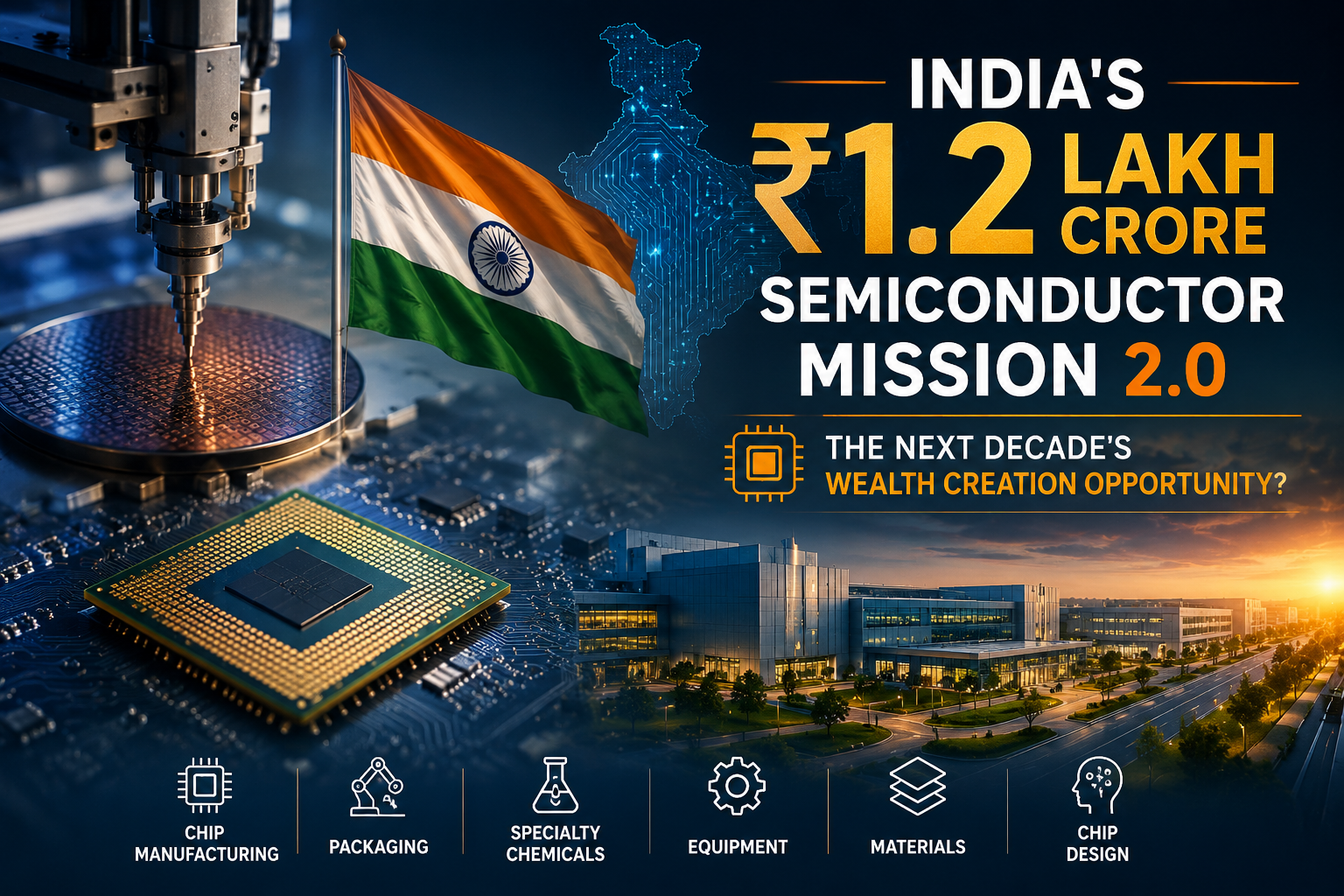
India’s Semiconductor Mission 2.0, with a proposed outlay of ₹1.2 lakh crore, could be one such defining opportunity. This isn’t just another government announcement—it’s a long-term industrial strategy aimed at making India a major player in the global semiconductor ecosystem.
The first phase of the mission had an outlay of ₹76,000 crore. Even before the second phase, 10 approved projects had already attracted nearly ₹1.6 lakh crore in investments. Now, the government is expanding support beyond chip manufacturing to include semiconductor equipment, specialty chemicals, materials, packaging, and deep-tech chip design.
This is where the real opportunity lies.
Why is this Such a Big Deal?
Semiconductors power almost everything around us:
- Smartphones
- Electric vehicles
- AI servers
- Consumer electronics
- Defence systems
- Medical equipment
- Industrial automation
- Data centres
Global demand for chips is expected to keep growing as artificial intelligence, electric mobility, robotics, cloud computing and automation become increasingly integrated into everyday life.
India doesn’t want to remain only a consumer of these technologies.
It wants to become a producer.
And governments across the world have shown that building a semiconductor ecosystem requires sustained public support over many years.
Companies That Could Benefit
Rather than focusing only on chip fabrication plants, investors should watch the broader ecosystem.
Kaynes Technology
Already building semiconductor packaging capabilities, Kaynes is positioning itself in one of the fastest-growing segments of the value chain. As more chips are assembled and tested domestically, companies like Kaynes could see increasing opportunities.
CG Power
Its semiconductor joint venture places the company in a strategic position as India develops domestic manufacturing capacity.
Dixon Technologies
As one of India’s leading electronics manufacturers, Dixon stands to benefit from greater localisation of components and an expanding electronics ecosystem.
Syrma SGS Technology & Avalon Technologies
Growing demand for electronics manufacturing, industrial products and embedded systems could provide long-term opportunities for these companies.
Navin Fluorine, Gujarat Fluorochemicals, SRF & Tatva Chintan
Semiconductor manufacturing requires extremely high-purity chemicals and specialty materials. If these companies expand into semiconductor-grade products, they could participate in a rapidly growing supply chain.
Linde India
Modern semiconductor fabs require ultra-high-purity industrial gases. As more fabrication and packaging facilities are established, demand for these products may increase.
This Isn’t a One-Year Story
Many investors make the mistake of looking only at quarterly earnings.
Structural themes unfold over several years.
History offers many examples:
- IT services in the late 1990s
- Private banking in the 2000s
- Specialty chemicals in the 2010s
- Digital platforms and manufacturing in recent years
Each of these trends rewarded patient investors who focused on long-term business fundamentals rather than short-term market noise.
Semiconductors could become one of India’s next major industrial growth stories.
Investment Takeaway
Government incentives alone don’t guarantee investment success. Investors should continue to evaluate business quality, execution capability, valuations, competitive positioning and financial strength before making decisions.
However, when a sector receives policy support, attracts significant private investment and addresses a strategic national priority, it often creates a favourable environment for well-managed companies to grow over time.
The semiconductor ecosystem deserves a place on every serious investor’s watchlist.
The biggest winners are often identified before the story becomes obvious to everyone.
Frequently Asked Questions (FAQ)
India’s Semiconductor Mission 2.0 is a government initiative aimed at strengthening India’s semiconductor ecosystem by supporting chip manufacturing, packaging, specialty materials, equipment, and semiconductor design.
Semiconductors are essential components used in smartphones, electric vehicles, AI servers, medical devices, defence equipment, industrial automation, and consumer electronics.
Companies mentioned in this article include Kaynes Technology, CG Power, Dixon Technologies, Syrma SGS Technology, Avalon Technologies, Navin Fluorine, Gujarat Fluorochemicals, SRF, Tatva Chintan, and Linde India.
The semiconductor industry is considered a structural long-term growth theme, with government support and increasing global demand expected to create opportunities over several years.
No. Investors should always evaluate business quality, financial strength, valuations, execution capability, and competitive positioning before making investment decisions.