Why is India's delivery of 7 Nuclear Steam Generators significant?
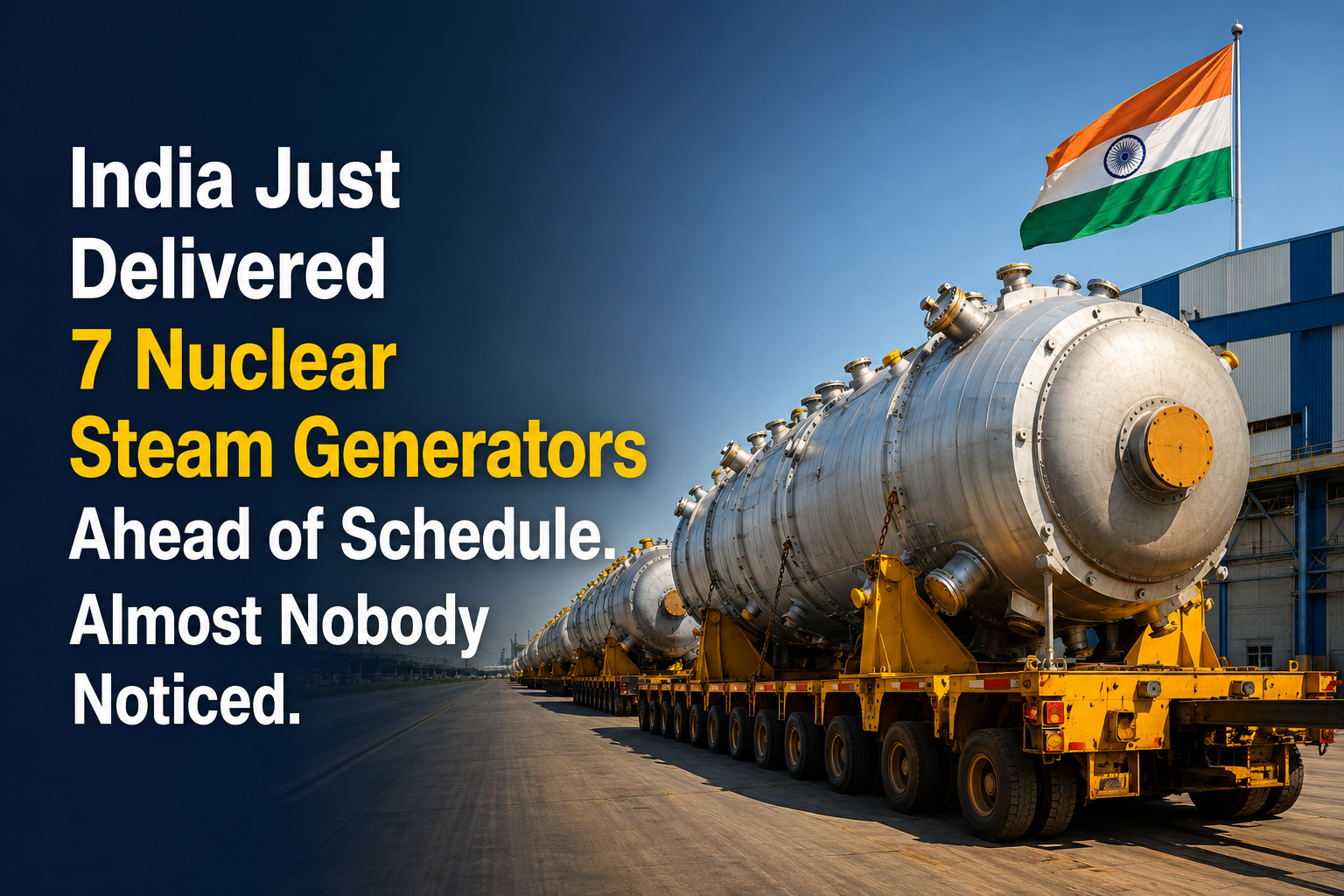
India, through the Larsen & Toubro’s Hazira facility, delivered seven 700 MWe Nuclear Steam Generators ahead of schedule under the indigenous PHWR programme. The achievement highlights India’s growing capabilities in nuclear manufacturing and strategic industrial development
Table of Contents
- Chapter 1: Why This Achievement Matters
- Chapter 2: What Is a Nuclear Steam Generator?
- Chapter 3: L&T's Contribution to India's Nuclear Programme
- Chapter 4: India's Growing Nuclear Ambitions
- Chapter 5: Stocks That Could Benefit From India's Nuclear Expansion
- Chapter 6: The Bigger Picture
- Chapter 7: Investment Perspective
- Chapter 8: Frequently Asked Questions (FAQ)
Why This Achievement Matters
Missiles make headlines, fighter jets dominate television debates, and defence exports often grab investor attention. Yet some of the most important indicators of a nation’s industrial strength rarely receive the same level of attention.
Standing beside Prime Minister Narendra Modi is a 700 MWe Nuclear Steam Generator—one of the most complex engineering systems ever built by mankind. India did not import it. India built it at Larsen & Toubro’s Hazira facility in Gujarat.
Most people scrolling through this image may not realize what they are looking at, but that would be a mistake.
What Is a Nuclear Steam Generator?
A nuclear steam generator sits at the heart of a nuclear power plant. It transfers heat from the reactor core to generate steam, which ultimately produces electricity for millions of homes and industries.
Building one is not simply manufacturing.
It requires mastery over metallurgy, precision engineering, heavy forgings, advanced welding, quality control, and decades of accumulated know-how.
Only a handful of nations possess this capability.
India is one of them.
L&T’s Contribution to India’s Nuclear Programme
Larsen & Toubro has already manufactured more than 42 steam generators for India’s nuclear sector and has now delivered seven additional units ahead of schedule under India’s indigenous 10 × 700 MWe PHWR programme. This achievement is particularly noteworthy because delays are often considered the norm in nuclear engineering projects worldwide. By completing the delivery ahead of schedule, India has demonstrated the strength of its engineering and manufacturing ecosystem, reflecting decades of investment, technological advancement, and expertise in building complex nuclear infrastructure.
India’s Growing Nuclear Ambitions
This achievement is about far more than power generation. It signals that India is steadily building strategic industrial capabilities that cannot be sanctioned, outsourced, or replicated overnight. As the country targets more than 22 GW of nuclear power capacity by 2031 and potentially over 100 GW in the decades ahead, this development represents much more than an engineering milestone. It highlights a long-term investment theme, as the expansion of India’s nuclear power ecosystem could create significant opportunities across manufacturing, engineering, construction, power equipment, and infrastructure sectors.
Stocks That Could Benefit From India’s Nuclear Expansion
Larsen & Toubro
The biggest direct beneficiary through nuclear equipment manufacturing, EPC contracts, heavy engineering and reactor components.
Bharat Heavy Electricals (BHEL)
Potential supplier of turbines, generators and power equipment for future nuclear projects.
Nuclear Power Corporation of India (through future opportunities)
While unlisted today, NPCIL’s expansion creates a massive ecosystem opportunity for listed suppliers.
Hindustan Construction Company (HCC)
Long-standing experience in nuclear power plant construction and infrastructure development.
Walchandnagar Industries
One of India’s specialized heavy engineering companies involved in nuclear and defence manufacturing.
Kirloskar Brothers
Potential beneficiary through critical pumps and fluid handling systems used in power infrastructure.
Bharat Electronics Limited (BEL)
Instrumentation, control systems and strategic electronics for critical infrastructure.
Engineers India Limited (EIL)
Engineering consultancy and project management opportunities in large-scale energy projects.
The Bigger Picture
The significance of this achievement extends far beyond the successful delivery of seven nuclear steam generators. It highlights several long-term advantages for India’s industrial and energy ecosystem:
Energy Sovereignty: Countries capable of manufacturing nuclear steam generators domestically are strengthening their ability to meet future energy needs without excessive dependence on foreign technology.
High-Value Manufacturing Growth: Advanced nuclear equipment manufacturing supports the development of sophisticated engineering capabilities, skilled jobs, and high-value industrial ecosystems.
Strategic Industrial Capability: Nuclear manufacturing requires expertise that takes decades to build, making it a critical strategic capability that cannot be easily replicated.
Strengthening India’s Nuclear Ecosystem: The successful execution of large-scale nuclear projects creates opportunities for engineering, construction, equipment manufacturing, and infrastructure companies.
Global Manufacturing Competitiveness: Delivering complex nuclear equipment ahead of schedule demonstrates India’s growing credibility as a destination for advanced manufacturing.
Long-Term Economic Impact: As nuclear power capacity expands, the sector could drive investment, technology development, and industrial growth for years to come.
India’s delivery of seven nuclear steam generators ahead of schedule is therefore more than an engineering achievement—it is a reflection of the country’s progress up the global industrial value chain and a development that investors may find worth monitoring.
Investment Perspective
India’s nuclear expansion remains a long-term structural theme rather than a short-term opportunity. Investors should monitor future reactor approvals, government policy support, nuclear capacity targets, and contract allocations across the nuclear ecosystem.
As the country expands its nuclear power generation capabilities, companies involved in engineering, manufacturing, construction, power equipment, and strategic infrastructure may find themselves well-positioned to benefit from the trend.
Conclusion
India’s successful delivery of seven nuclear steam generators ahead of schedule demonstrates much more than engineering excellence. It reflects the country’s growing industrial capabilities, increasing self-reliance in strategic sectors, and commitment to strengthening long-term energy security.
As India continues expanding its nuclear power infrastructure, the benefits could extend far beyond electricity generation—supporting manufacturing growth, technological advancement, employment creation, and new investment opportunities.
The achievement may not have generated major headlines, but it represents a milestone in India’s journey toward becoming a global industrial and energy powerhouse.
Disclaimer: This article is for educational and informational purposes only and should not be construed as investment advice. Investors should conduct their own research and consult a qualified financial advisor before making investment decisions.
Q7 Trading Solutions
📲 Telegram Support: @q7sales_support
🌐 Algorithmic Trading | Market Research | Investment Insights | Wealth Creation Strategies
Frequently Asked Questions (FAQs)
A Nuclear Steam Generator is a critical component of a nuclear power plant that transfers heat from the reactor core to produce steam, which is then used to generate electricity.
Delivering seven units ahead of schedule demonstrates India’s growing capabilities in heavy engineering, nuclear manufacturing, and strategic industrial infrastructure.
The steam generators were manufactured by Larsen & Toubro (L&T) at its Hazira facility in Gujarat.
It is India’s indigenous nuclear power expansion programme focused on deploying multiple 700 MWe Pressurized Heavy Water Reactors across the country.
Potential beneficiaries include L&T, BHEL, HCC, Walchandnagar Industries, Kirloskar Brothers, BEL, and Engineers India Limited.
Nuclear power can improve energy security, support industrial growth, reduce dependence on fossil fuels, and provide reliable electricity generation.
India’s nuclear power capacity is projected to reach approximately 22.38 GW by 2031.
Nuclear manufacturing requires specialized expertise, advanced engineering, and strict quality standards that only a limited number of countries possess.