How Lower U.S. Tariffs Could Benefit Indian Export Stocks
Lower U.S. tariffs may boost Indian exporters by improving price competitiveness. Discover the sectors, companies, and investment opportunities that could benefit.
Table of Contents
Why This Trade Policy Matters for Investors
Global trade policies often create investment opportunities long before they become obvious to the broader market. One such development is the recent reduction in U.S. tariffs on several Indian imports. While this may appear to be a routine policy change, it has the potential to improve India’s export competitiveness across multiple industries.
Lower tariffs reduce the cost of Indian goods entering the U.S. market, making them more attractive to American buyers. Increased demand can translate into higher revenues, improved profitability, and stronger long-term growth prospects for export-oriented companies. Investors who identify these structural opportunities early are often better positioned to benefit before the broader market fully prices them in.
Indian Sectors That Could Benefit
1. Gems & Jewellery
Nearly 30% of India’s gems and jewellery exports are shipped to the United States. Lower tariffs improve pricing competitiveness, potentially increasing export demand.
Stocks to Watch
- Vaibhav Global
- Other export-oriented jewellery companies
2. Textiles
India supplies approximately 7–8% of U.S. textile imports and is already among America’s largest suppliers.
Lower tariffs could encourage global brands to source more products from Indian manufacturers.
Stocks to Watch
- Gokaldas Exports
- Pearl Global
- Welspun India
- Trident
- Arvind
- KPR Mills
3. Auto Components
Approximately 27% of India’s auto component exports are destined for the U.S.
Lower tariffs improve cost competitiveness and may increase sourcing from Indian manufacturers.
Stocks to Watch
- Bharat Forge
- Sona BLW
- Balkrishna Industries
- Ramkrishna Forgings
4. Chemicals
India’s specialty chemical industry exports nearly 15–18% of its products to the United States.
Reduced tariffs may strengthen export competitiveness for chemical manufacturers.
Stocks to Watch
- UPL
- SRF
- PI Industries
- Jubilant Ingrevia
- Aarti Industries
5. IT Services
Unlike physical goods, software services are generally not affected by import tariffs.
Companies such as TCS, Infosys, and Wipro continue to be influenced primarily by global technology spending rather than trade duties.
Why Markets React Before Headlines
Financial markets are forward-looking.
Rather than waiting for quarterly earnings, investors often price in future expectations.
By the time favorable news becomes widely discussed, institutional investors may have already established positions.
Understanding policy-driven themes early can therefore provide valuable investment insights before market sentiment changes.
How Q7 Trading Solutions Approaches Such Opportunities
At Q7 Trading Solutions, we continuously monitor global developments, economic policies, and sector-specific trends to identify potential market opportunities.
Our algorithmic trading approach is designed to analyze market data objectively, helping traders execute systematic, rule-based strategies instead of making emotional decisions during periods of uncertainty.
While no investment strategy guarantees profits, disciplined execution and data-driven decision-making remain essential components of long-term market participation.
Conclusion
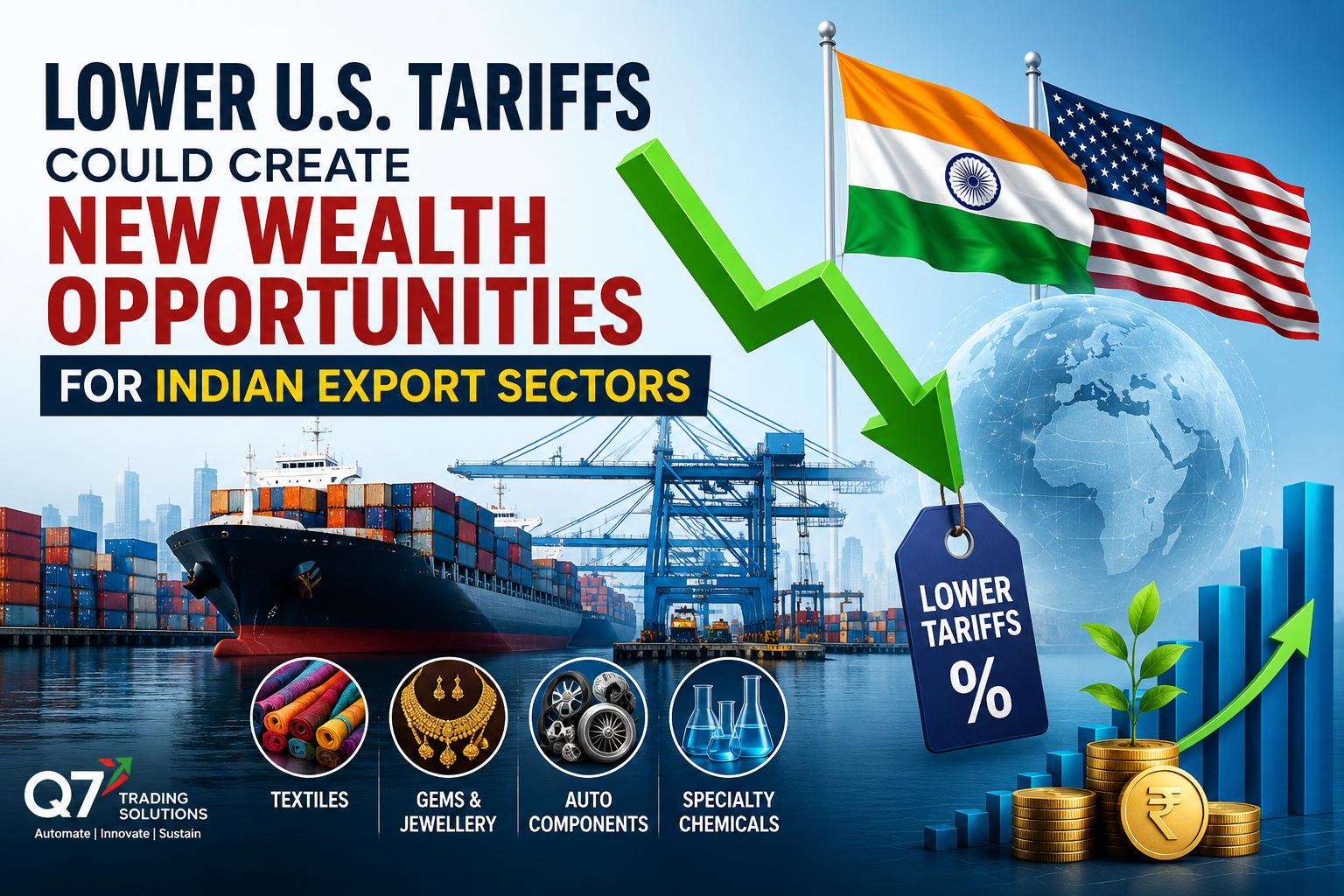
Lower U.S. tariffs represent more than a trade policy adjustment—they could create favorable conditions for several export-oriented Indian industries.
Sectors including gems & jewellery, textiles, auto components, and specialty chemicals may benefit if export demand strengthens over time.
For investors, the key lesson remains the same: understanding structural trends early often provides greater opportunities than simply reacting after headlines dominate the news.
Frequently Asked Questions
Lower tariffs reduce the cost of Indian products in the U.S. market, making them more competitive and potentially increasing export demand.
Gems & Jewellery, Textiles, Auto Components, and Specialty Chemicals are among the sectors that could benefit from improved export competitiveness.
Import tariffs mainly affect physical goods. IT services are driven more by global technology spending than by import duties.
Lower tariffs alone do not guarantee higher stock prices. However, stronger export demand and improved earnings may create favorable conditions for well-managed companies.
Trade policies can influence company revenues, industry growth, and market sentiment, making them important indicators for long-term investment opportunities.
Q7 Trading Solutions uses algorithmic trading strategies that analyze market conditions and execute trades based on predefined rules, helping traders reduce emotional decision-making.