Is India entering a structural bull market?
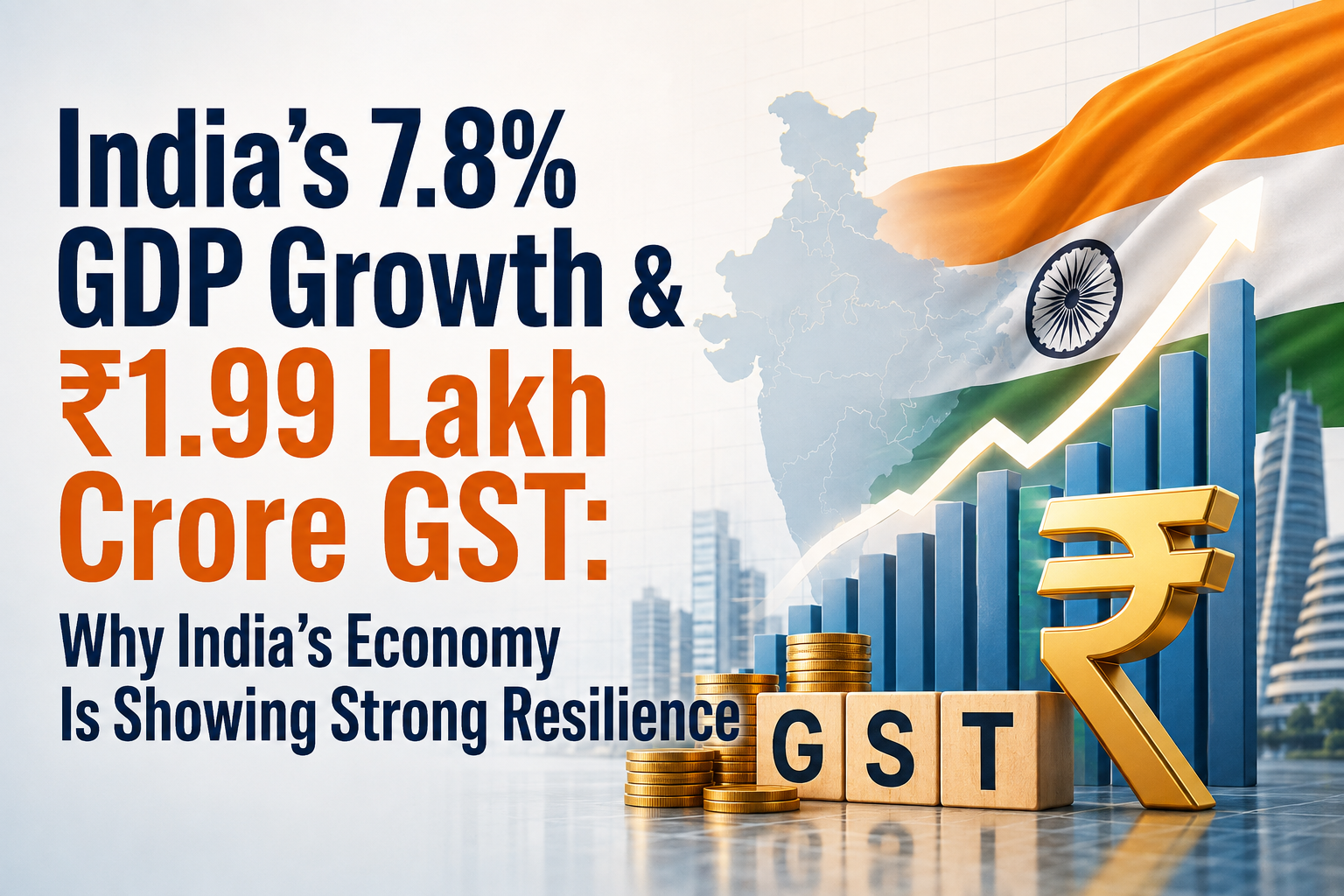
India appears to be entering a structural bull market supported by strong GDP growth, rising corporate earnings, manufacturing expansion, infrastructure investment, global supply chain diversification, and increasing foreign institutional investment. While no market trend is guaranteed, these long-term economic drivers continue to strengthen India’s investment outlook.
Table of Contents
- Chapter 1: The Bigger Investment Opportunity Is Emerging
- Chapter 2: India's Growth Story Is Becoming Structural
- Chapter 3: AI Needs More Than Software
- Chapter 4: A Practical Investing Example
- Chapter 5: Lessons From Previous Market Cycles
- Chapter 6: Why Q7 Believes India's Structural Bull Market Has Strong Foundations
- Chapter 7: Frequently Asked Questions
The Bigger Investment Opportunity Is Emerging
Artificial Intelligence has become one of the biggest investment themes of the decade. Companies involved in AI have captured global attention, attracting billions of dollars from investors seeking the next technological revolution. However, history repeatedly shows that wealth creation rarely remains concentrated in a single sector forever.
As industries evolve, capital gradually flows toward businesses that enable long-term economic growth. Today, many investors believe India is entering such a phase. Beyond AI software companies lies a much broader investment opportunity driven by infrastructure, manufacturing, logistics, power, defence, and industrial expansion.
India’s Growth Story Is Becoming Structural
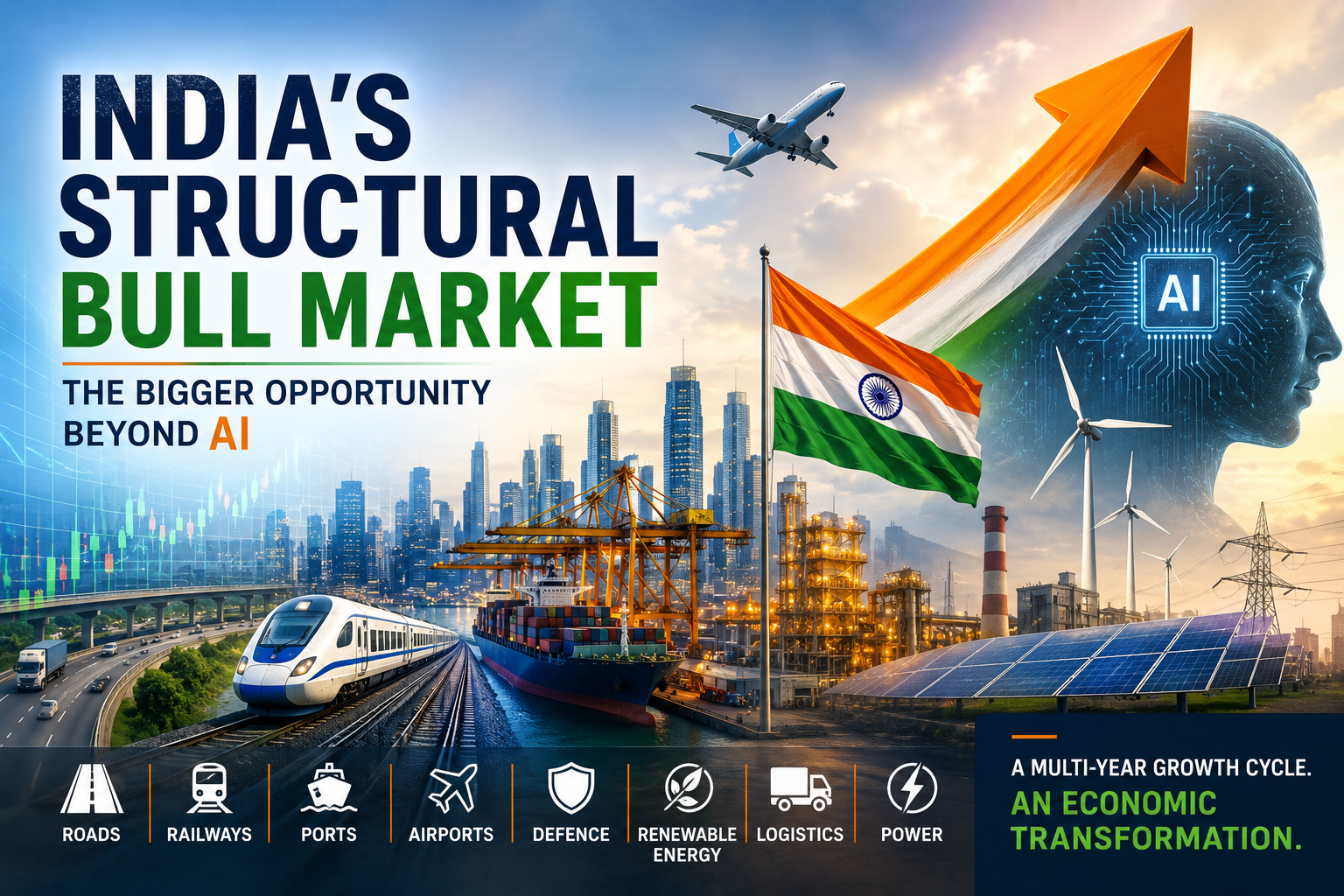
India is witnessing one of the strongest investment cycles in decades. Record investments in roads, railways, ports, airports, defence, renewable energy, logistics, and power are creating the foundation for sustained economic expansion.
This is not merely another market rally. It represents a structural transformation of the Indian economy that could continue for years as both public and private investment accelerate.
Unlike short-term market themes, structural growth is driven by long-term improvements in productivity, infrastructure, industrial capacity, and corporate profitability.
AI Needs More Than Software
Artificial Intelligence depends on far more than software applications.
Every AI model requires massive physical infrastructure to operate efficiently, including reliable electricity, advanced data centres, cooling systems, power transmission networks, copper, cables, industrial automation, logistics, and construction.
India has numerous listed companies operating across these value chains.
This means that even if global investors reduce exposure to expensive AI software stocks, they may simultaneously increase investments in businesses supporting the infrastructure behind AI adoption.
For investors, this broadens the opportunity far beyond technology companies alone.
A Practical Investing Example
Consider two hypothetical investors.
The first investor allocates most of the portfolio into a handful of AI-related stocks after seeing widespread media attention. When market volatility increases, fear influences investment decisions and positions are exited prematurely.
The second investor builds a diversified portfolio across capital goods, infrastructure, defence, banking, power, manufacturing, logistics, and selected technology companies.
Instead of chasing headlines, the focus remains on India’s long-term structural growth.
History has consistently shown that disciplined diversification combined with patience often produces better long-term outcomes than concentrating entirely on a single popular investment theme.
Lessons From Previous Market Cycles
Financial markets frequently reward investors who identify emerging themes before they become obvious.
During the early 2000s, infrastructure companies attracted little attention before delivering remarkable returns.
Private banks experienced a similar journey during the following decade, while manufacturing businesses benefited significantly after the economic recovery that began in 2020.
Each cycle reinforced the same lesson.
The biggest wealth creators are often companies quietly building future capabilities long before they dominate headlines.
Why Q7 Believes India’s Structural Bull Market Has Strong Foundations
At Q7 Trading Solutions, we believe successful investing is built upon recognising long-term economic shifts rather than reacting to daily news.
Several powerful factors continue to strengthen India’s long-term outlook:
- Strong GDP growth
- Rising corporate profitability
- Expanding manufacturing
- Global supply-chain diversification
- Massive infrastructure spending
- Increasing retail participation
- Returning foreign institutional investment
- Stable banking system
- Improving earnings visibility
These drivers reinforce one another, creating conditions that have historically supported long-term wealth creation.
Artificial Intelligence is likely to remain one of the world’s most important technologies for years to come. However, the wealth created by this revolution will extend far beyond software companies alone.
India’s expanding infrastructure, manufacturing capabilities, logistics networks, financial system, and industrial ecosystem position the country to benefit from multiple long-term investment themes simultaneously.
Rather than chasing yesterday’s winners, disciplined investors often focus on identifying tomorrow’s opportunities before they become widely recognised.
At Q7 Trading Solutions, our objective is not to predict headlines but to help investors navigate long-term market trends through systematic, data-driven investing.
Frequently Asked Questions
A structural bull market is a long-term period of sustained economic and market growth supported by strong fundamentals such as GDP expansion, corporate earnings growth, infrastructure development, and increasing investments.
India benefits from strong economic growth, expanding manufacturing, infrastructure spending, favourable demographics, digital transformation, and increasing foreign investment, making it an attractive destination for long-term capital.
AI requires supporting industries including power generation, data centres, logistics, industrial automation, construction, cooling infrastructure, cables, and manufacturing. Companies operating in these sectors may benefit as AI adoption expands.
Diversification spreads investment risk across multiple sectors, reducing dependence on a single industry while increasing exposure to different long-term growth opportunities.
Q7 Trading Solutions uses algorithm-driven investment strategies designed to identify opportunities, manage risk systematically, and reduce emotional decision-making through disciplined execution.