Why are Foreign Portfolio Investors (FPIs) investing heavily in India again?
Foreign Portfolio Investors are returning to India due to strong economic growth, improving corporate earnings, expanding manufacturing, large-scale infrastructure investments, and renewed global confidence in India’s long-term growth story. Rising institutional inflows often indicate improving market sentiment, although they do not guarantee future market performance.
Table of Contents
- Chapter 1: Global Money Is Returning to India
- Chapter 2: India's Growth Story Continues to Strengthen
- Chapter 3: Corporate Earnings Are Supporting the Market
- Chapter 4: India Is Becoming a Preferred Global Investment Destination
- Chapter 5: Liquidity Drives Markets
- Chapter 6: Could This Be the Beginning of a New Bull Market?
- Chapter 7: Positioning Before the Crowd
- Chapter 8: Frequently Asked Questions (FAQs)
Global Money Is Returning to India
For several months, market headlines were dominated by one recurring theme—Foreign Portfolio Investors (FPIs) were selling Indian equities. This created uncertainty among many retail investors, prompting some to exit the market while others waited on the sidelines for deeper corrections.
However, market dynamics have shifted significantly. During July alone, FPIs invested nearly ₹42,000 crore into Indian equities, indicating renewed confidence in India’s long-term growth prospects. Institutional investors rarely make decisions based on emotions. Their capital generally follows improving economic conditions, stronger corporate earnings, and attractive long-term opportunities.
India’s Growth Story Continues to Strengthen
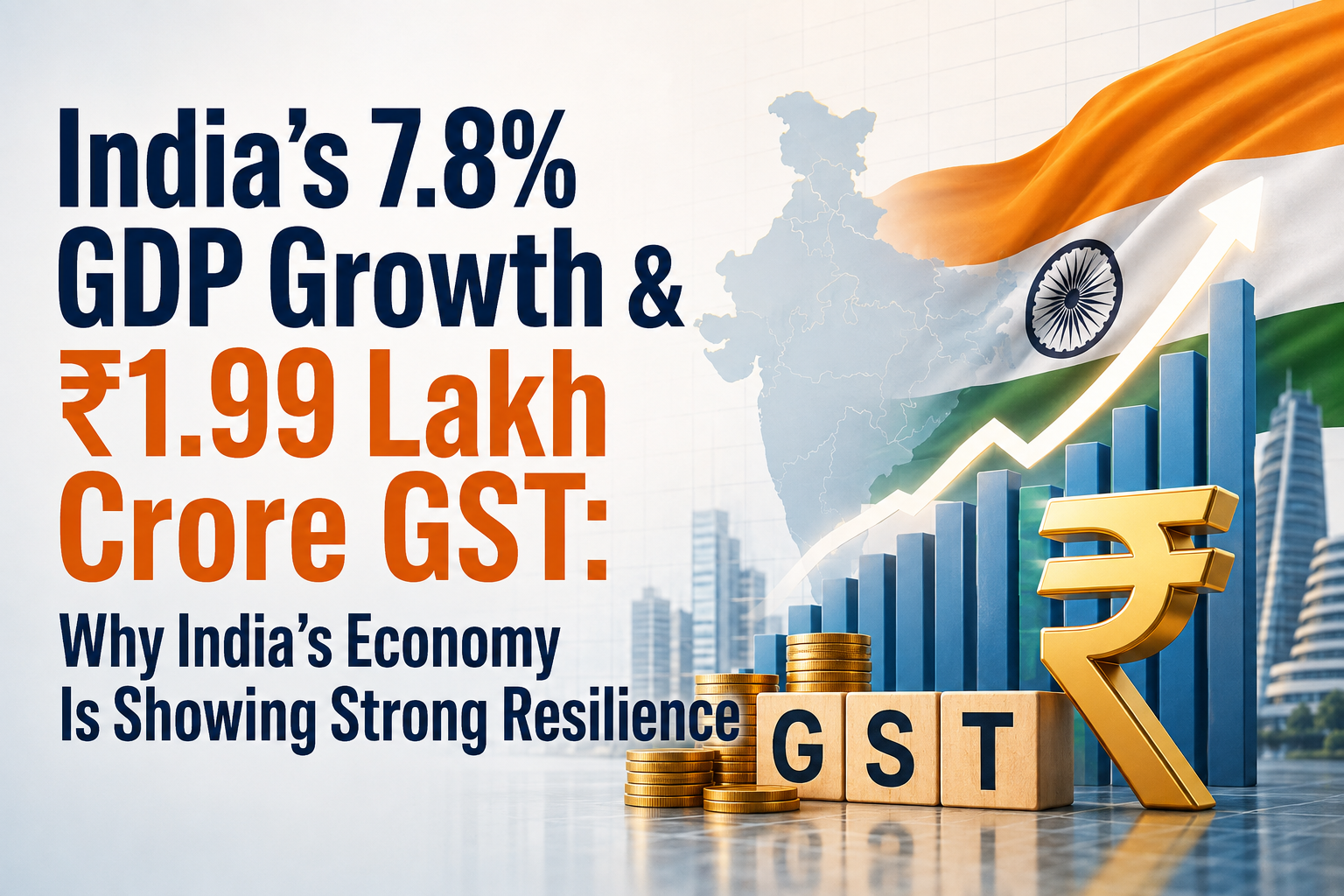
One of the biggest reasons global investors continue to favour India is its economic resilience. While several developed economies continue to face slowing growth and fiscal challenges, India remains one of the fastest-growing major economies in the world.
Strong GDP growth, rising consumption, expanding manufacturing, and increasing government investment have created a supportive environment for long-term business expansion. Global institutional capital naturally seeks economies capable of delivering sustainable growth over many years.
Corporate Earnings Are Supporting the Market
Healthy corporate earnings remain one of the strongest drivers of long-term stock market performance.
Indian companies are entering a phase supported by healthier balance sheets, improving profitability, lower banking sector NPAs, rising manufacturing activity, record infrastructure spending, and gradually improving private capital expenditure. As corporate earnings continue to expand, businesses become increasingly attractive to long-term institutional investors.
India Is Becoming a Preferred Global Investment Destination
India is no longer viewed simply as a consumption-driven economy. It is rapidly becoming a global manufacturing and investment hub.
Several structural themes continue to attract long-term capital, including:
- Manufacturing expansion
- Electronics production
- Renewable energy
- Defence manufacturing
- Rail infrastructure
- Data centres
- Artificial Intelligence
- Digital infrastructure
Global companies continue diversifying their supply chains, and India is emerging as one of the biggest beneficiaries of this structural transformation.
Liquidity Drives Markets
Financial markets ultimately move because capital flows into or out of assets.
While news often influences short-term sentiment, sustained market trends are generally supported by increasing liquidity. The return of institutional money into Indian equities indicates improving confidence among professional investors who typically evaluate macroeconomic trends over longer investment horizons.
Understanding money flow often provides more valuable insights than simply reacting to daily headlines.
Could This Be the Beginning of a New Bull Market?
Every major bull market begins when uncertainty remains high rather than when optimism is widespread.
Today’s market environment shares several characteristics commonly associated with previous long-term market expansions:
- Rising infrastructure investment
- Manufacturing growth
- Artificial Intelligence adoption
- Strong SIP inflows
- Stable banking system
- Moderating inflation
- Renewed institutional participation
Although no market moves in a straight line, these combined factors provide a supportive backdrop for long-term wealth creation if economic momentum continues.
Positioning Before the Crowd
By the time financial television channels begin discussing a new bull market, institutional investors have often already established significant positions.
Long-term investing frequently rewards those who recognise structural trends before they become obvious to the broader market. Rather than reacting emotionally to short-term volatility, disciplined investors typically focus on business fundamentals, economic trends, and capital flows.
Preparing early often proves more valuable than chasing momentum after major price moves have already occurred.
The return of nearly ₹42,000 crore in FPI investments during July reflects improving confidence in India’s long-term economic story. While future market performance can never be guaranteed, strong economic fundamentals, expanding corporate earnings, infrastructure development, and increasing institutional participation continue to create a constructive environment for investors.
At Q7 Trading Solutions, we believe successful investing is built on preparation rather than prediction. Our algorithmic trading systems are designed to identify opportunities using disciplined, rule-based strategies that help investors navigate changing market conditions with consistency.
Frequently Asked Questions (FAQs)
Foreign Portfolio Investors are overseas institutional investors who invest in financial assets such as equities, bonds, and mutual funds in other countries.
FPIs are returning because of India’s strong economic growth, improving corporate earnings, infrastructure development, manufacturing expansion, and increasing global confidence in the Indian economy.
No. FPI inflows are an important indicator of institutional sentiment, but market performance also depends on corporate earnings, economic conditions, valuations, and global factors.
Liquidity provides capital for buying financial assets. Increasing liquidity often supports higher market participation and can contribute to long-term market trends.
Q7 Trading Solutions uses algorithmic trading systems designed to identify market opportunities while managing risk through disciplined, rule-based execution.