How can algorithmic trading help during volatile stock market conditions?
Algorithmic trading follows predefined strategies instead of emotions, allowing trades to be executed systematically during volatile market conditions. This can help traders maintain consistency when manual decision-making becomes difficult.
Table of Contents
- Chapter 1: Introduction
- Chapter 2: July Was One of the Most Volatile Months for NIFTY
- Chapter 3: How Q7's Algorithm Performed During the Same Period
- Chapter 4: Why Algorithmic Trading Matters During Volatile Markets
- Chapter 5: Why Traders Choose Q7ALGO
- Chapter 6: The Importance of Systematic Trading
- Chapter 7: Conclusion
- Chapter 8: Frequently Asked Questions
Introduction
July proved to be one of the most volatile months for Indian equity markets. The NIFTY 50 experienced sharp swings, sudden declines, and rapid recoveries, making it increasingly difficult for many traders to maintain confidence and consistency in their trading decisions.
During periods of heightened volatility, emotional decision-making often becomes the biggest challenge. Fear encourages premature exits, while greed leads to impulsive entries—both of which can negatively impact trading performance.
At Q7 Trading Solutions, our algorithmic trading approach is designed to execute predefined strategies systematically, helping traders navigate changing market conditions without emotional interference.
July Was One of the Most Volatile Months for NIFTY
The chart below highlights the significant price swings witnessed throughout July.
 Large intraday movements created uncertainty across the broader market, making it difficult for many manual traders to maintain discipline.
- Volatility tests conviction before rewarding patience.
- Emotional trading often increases during uncertain markets.
How Q7’s Algorithm Performed During the Same Period
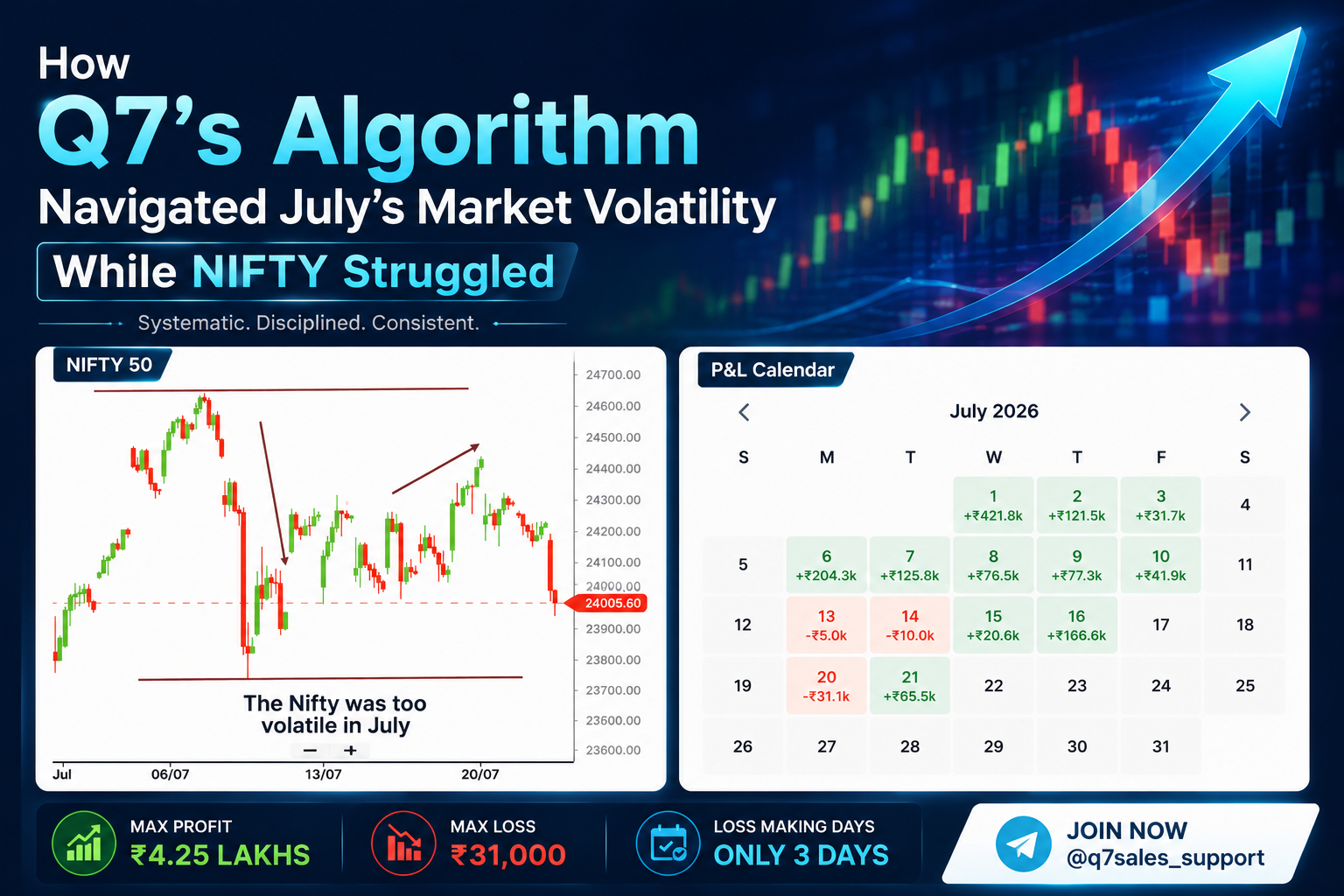
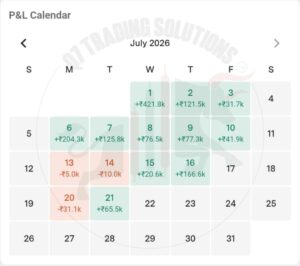
While the broader market remained volatile, Q7’s #ALGOFUT + #OPTIONALGO continued executing trades according to predefined trading strategies.
The performance calendar shows:
- Maximum Profit Day: ₹4.25 Lakhs
- Maximum Loss Day: ₹31,000
- Loss Making Days: Only 3
These results demonstrate how systematic execution can continue functioning even during periods of increased market volatility
Why Algorithmic Trading Matters During Volatile Markets
Market volatility often creates emotional reactions.
Many traders experience:
- Fear during corrections
- Greed during rallies
- Hesitation before entering trades
- Revenge trading after losses
Algorithmic trading is designed to remove these emotional influences by following predefined execution rules.
- Successful trading is built on consistency, not emotions.
- Discipline often matters more than prediction.
Why Traders Choose Q7ALGO
Q7 Trading Solutions focuses on systematic execution through algorithm-driven strategies.
Key highlights include:
- Accurate stock selection
- Timely execution
- Fully automated trading
- Supports CE & PE strategies
- No manual intervention
- Designed for passive participation
The objective is to execute trades consistently rather than react emotionally to market fluctuations.
The Importance of Systematic Trading
Markets will continue to experience periods of volatility.
Some phases reward aggressive trading.
Others reward patience and discipline.
What remains consistent is the importance of following a structured trading process instead of making emotional decisions.
- Markets change every day.
- Discipline should not.
Conclusion
July’s volatility once again demonstrated that uncertainty is a natural part of financial markets.
While manual traders often struggle with emotional decision-making during such periods, systematic execution continues to follow predefined strategies with consistency.
Although no trading strategy can guarantee future results, disciplined execution remains one of the most valuable characteristics of successful market participation.
At Q7 Trading Solutions, we continue to monitor market movements and use algorithm-driven strategies designed to help traders navigate changing market conditions with greater consistency
Connect With Us
📩 Q7 Trading Solutions
Telegram Support: @q7sales_support
Frequently Asked Questions
Algorithmic trading follows predefined rules and executes trades systematically without being influenced by fear or greed.
No. Algorithmic trading cannot eliminate market risk, but it can help reduce emotional decision-making by following a disciplined trading strategy.
Automated trading provides consistency, timely execution, and removes the need for constant manual intervention.
No. Past performance should not be considered an indicator or guarantee of future results.